Influence Machines

A new pattern is emerging — not loud, not alarming, just… consistent.
Across conversations, feeds, workplaces, and communities, the same subtle rhythm appears: ideas spreading not like wildfire, but like well‑designed software.
Not manipulation.
Not coercion.
Just influence behaving with the efficiency of a machine.
The Ledger notes the shift.
Something in the cultural field has become more structured, more patterned, more intentional.
The question is not who built the machine,
but what behaviours does it reward —
and what it quietly discourages.
Influence used to be a conversation.
Now it behaves more like a machine.
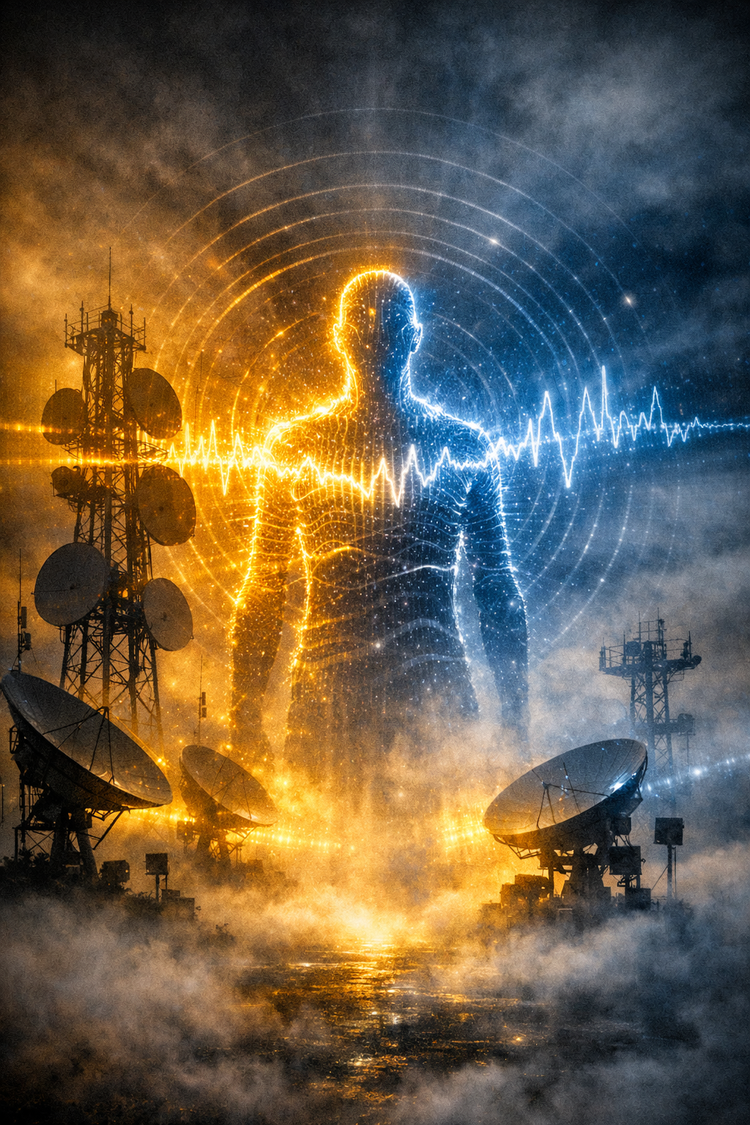
Not a single device, but a distributed apparatus — a network of incentives, interfaces, and invisible levers that shape behaviour without ever announcing themselves. The modern influence machine doesn’t persuade; it configures. It doesn’t argue; it arranges. It doesn’t shout; it hums quietly in the background, adjusting the environment until the desired behaviour feels like the natural one.
The machine works because it is everywhere and nowhere.
It hides inside defaults, inside frictionless paths, inside the tiny nudges that make one option feel easier than another. It lives in the architecture of feeds, the cadence of notifications, the design of choices. It is not a villain. It is a system optimised for outcomes.
And systems, once optimised, rarely ask permission.
The most powerful influence machines are not the ones that manipulate emotion. They are the ones that shape attention — because attention is the gateway to everything else. What we see becomes what we consider. What we consider becomes what we choose. What we choose becomes who we are.
The machine understands this.
It does not need to change your mind.
It only needs to change what your mind encounters.
Influence machines thrive on scale. They learn from patterns, refine themselves through feedback loops, and adjust their behaviour faster than any human institution. They are not conscious, but they are effective. They do not have intent, but they have direction. They do not have ideology, but they have momentum.
And momentum is its own kind of power.
The danger is not that the machine is malicious.
The danger is that it is indifferent.
Indifferent to nuance.
Indifferent to context.
Indifferent to the slow, fragile processes that make a human life meaningful.
The machine optimises for engagement, not understanding.
For efficiency, not reflection.
For prediction, not possibility.
To live inside an influence machine is to live inside a world that is constantly shaping you while insisting it is doing nothing at all.
But the moment you see the machine — the moment you recognise its architecture — something shifts. The spell thins. The defaults become visible. The nudges become optional. The environment becomes something you can move through with intention rather than drift through unconsciously.
Influence machines are powerful.
But they are not inevitable.
Visibility is the first form of resistance.