The World as Transmission
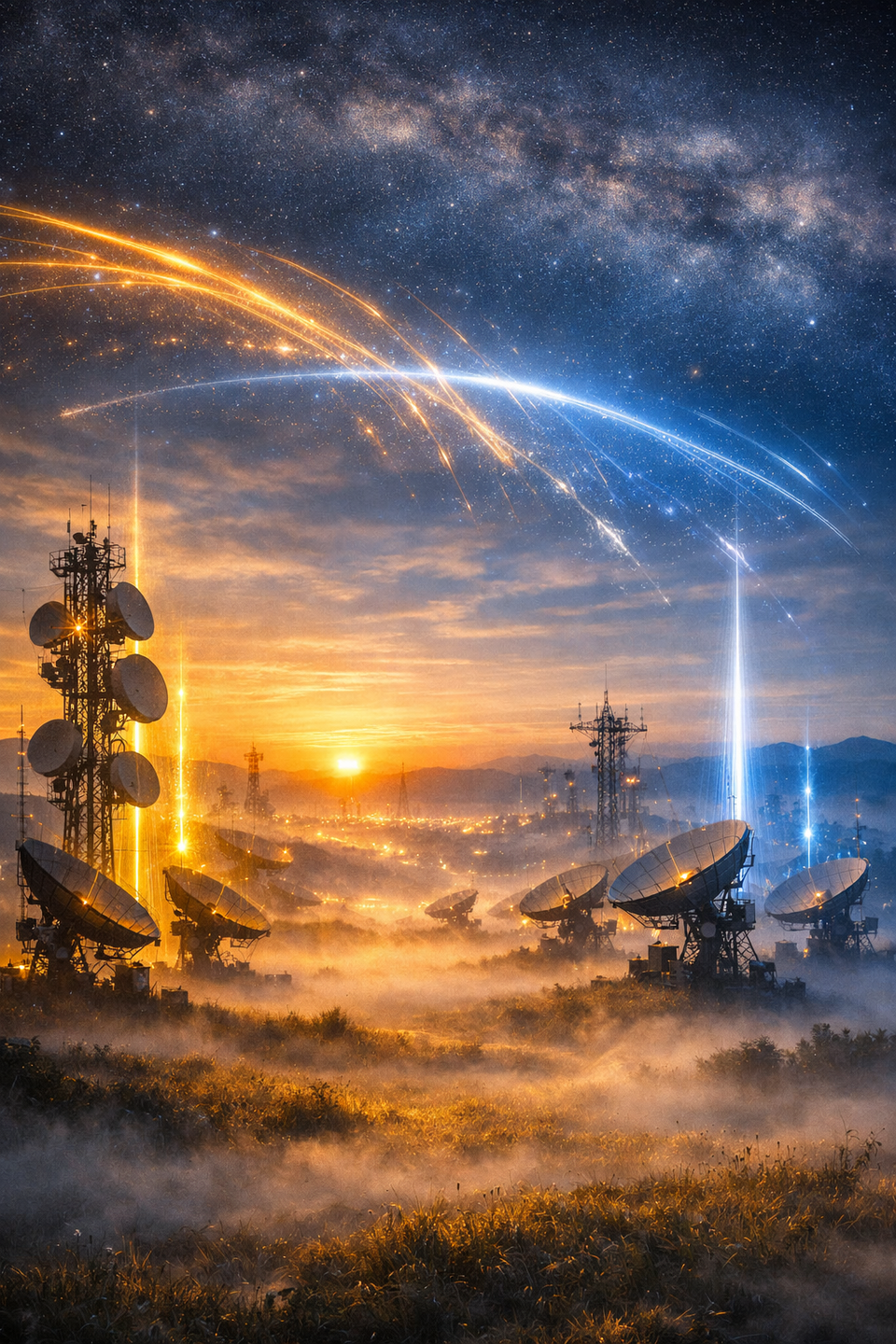
Summary: Everything is sending something: people, environments, systems, silence. Signal as the fundamental architecture of reality.
The World as Transmission
The world is not silent — it is a continuous broadcast.
The world is not a collection of objects. It is a continuous broadcast. Every moment, every environment, every interaction is sending signal — whether or not we are capable of receiving it.
Most people imagine the world as passive: a backdrop, a stage, a neutral container for human activity. But the world is not passive. It is active, expressive, and constantly transmitting information.
The question is never whether the world is speaking. The question is whether the receiver is tuned well enough to hear it.
1. Reality as a Field of Signals
The world is not silent. It is a field of continuous transmission:
light, temperature, motion, pattern, rhythm, behaviour, atmosphere, probability, intention.
Every environment is a broadcast. Every person is a transmitter. Every moment is a signal event.
We do not live in the world. We live inside its transmissions.
2. The World Speaks in Structure, Not Sentences
The world does not communicate in language. It communicates in structure.
Structure is the pattern beneath events: the way a room feels before anyone speaks, the tension in a conversation before words appear, the shift in atmosphere when truth is withheld, the rhythm of a city at dawn, the emotional weather of a relationship.
These are not “vibes.” They are signals — pre‑linguistic, pre‑conceptual, and often more accurate than verbal information.
The world speaks long before we interpret it.
3. Transmission Is Not Mystical — It Is Mechanical
Transmission is not magic. It is mechanics.
Every system emits signal: biological, social, emotional, ecological, technological, interpersonal.
A forest transmits. A market transmits. A relationship transmits. A conversation transmits. A silence transmits.
Transmission is simply the outward expression of internal state. Everything that exists is broadcasting what it is.
4. The Problem of Selective Listening
Humans do not receive the world evenly. We receive selectively.
We notice what confirms our expectations, aligns with our fears, supports our identity, fits our narrative, or matches our emotional readiness.
This selective listening creates a false sense of clarity — a clarity built on omission.
The world is transmitting far more than the mind is willing to receive.
5. The World Transmits Through People
People are not opaque. They are transmitters.
A person transmits through posture, tone, micro‑expressions, timing, silence, inconsistency, emotional leakage, behavioural patterns.
Most communication is not verbal. Most truth is not spoken.
If you listen only to words, you will miss the majority of the transmission.
6. The World Transmits Through Environments
Environments are not neutral. They shape perception and behaviour through constant signal.
Clutter transmits chaos. Order transmits stability. Nature transmits coherence. Crowds transmit urgency. Architecture transmits intention. Digital spaces transmit velocity.
Every environment is a form of communication. We are shaped by the signals we inhabit.
7. The World Transmits Through Events
Events are not isolated. They are expressions of underlying dynamics.
A conflict is a transmission. A coincidence is a transmission. A failure is a transmission. A breakthrough is a transmission. A pattern repeating is a transmission.
Events are the world’s way of revealing structure.
The sovereign mind does not ask, “Why did this happen to me?” It asks, “What is this event transmitting?”
8. The Cost of Ignoring Transmission
When we fail to receive the world’s signals, the costs accumulate.
Misreading people. Misreading environments. Misreading danger. Misreading opportunity. Misreading ourselves.
Ignoring transmission does not silence it. It simply forces the world to repeat itself — louder each time.
The world escalates until the signal is received.
9. Learning to Receive the World
Receiving the world requires three disciplines:
Sensory Presence — being physically attuned to the environment.
Emotional Clarity — not letting internal turbulence overwrite external signal.
Cognitive Humility — allowing the world to be what it is, not what we assume.
Receiving the world is not about hypervigilance. It is about precision.
10. The World as a Living Broadcast
The world is not static. It is a living transmission — dynamic, responsive, intelligent in its own mechanical way.
When the receiver is clean, patterns become visible, intentions become legible, environments become readable, people become transparent, events become meaningful.
The world stops being confusing. It becomes communicative.
The sovereign mind does not impose meaning on the world. It listens for the meaning the world is already sending.